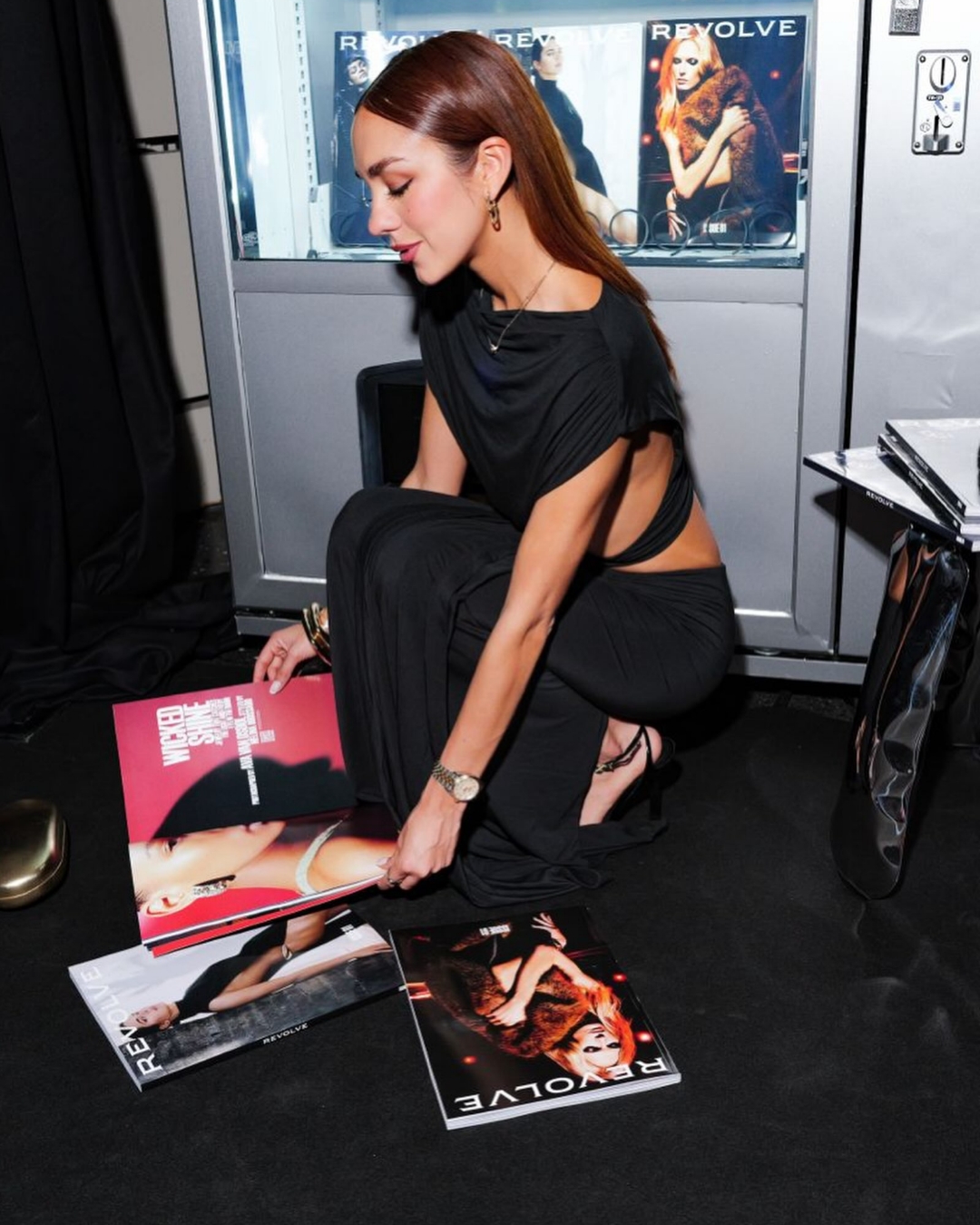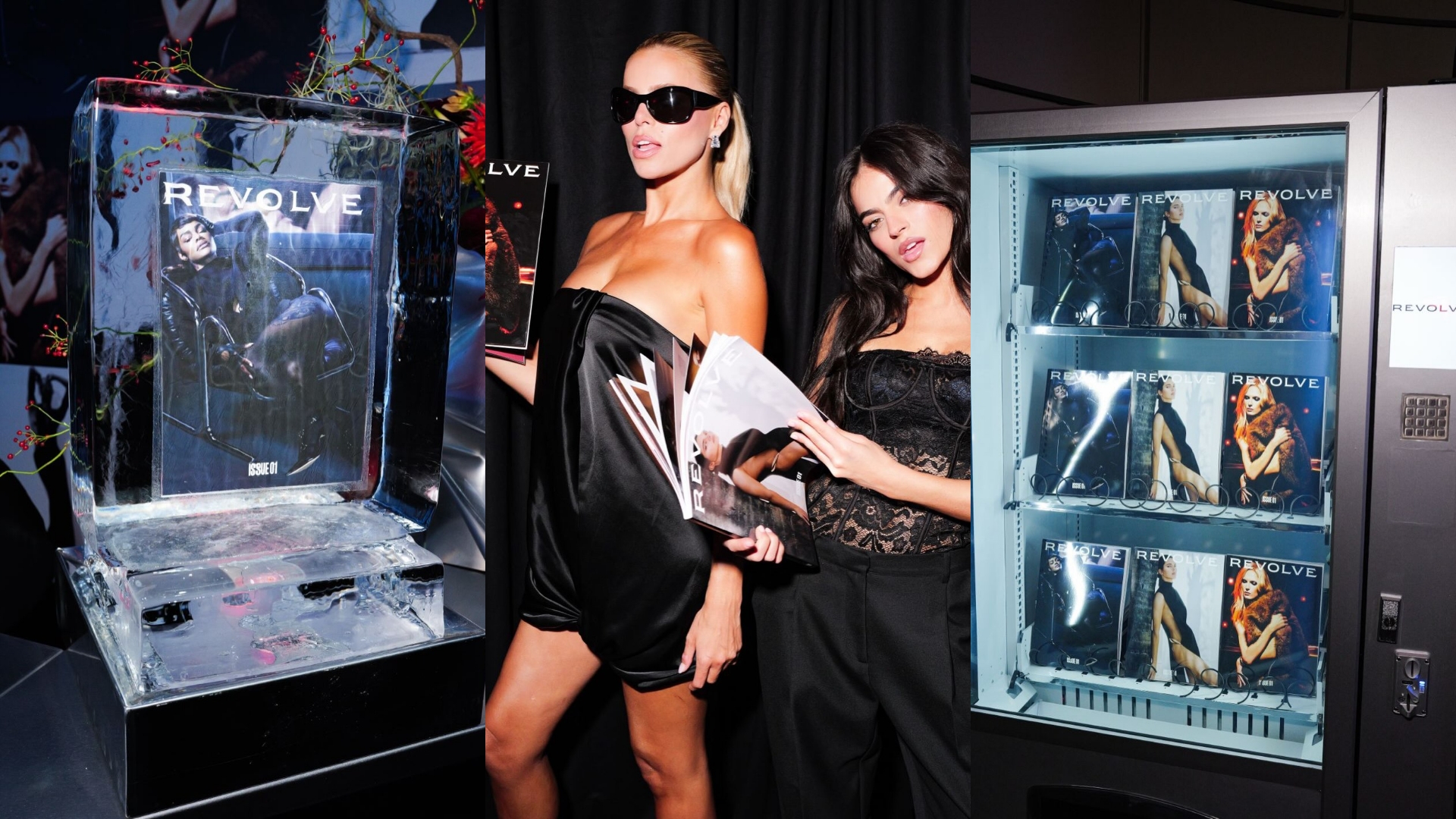
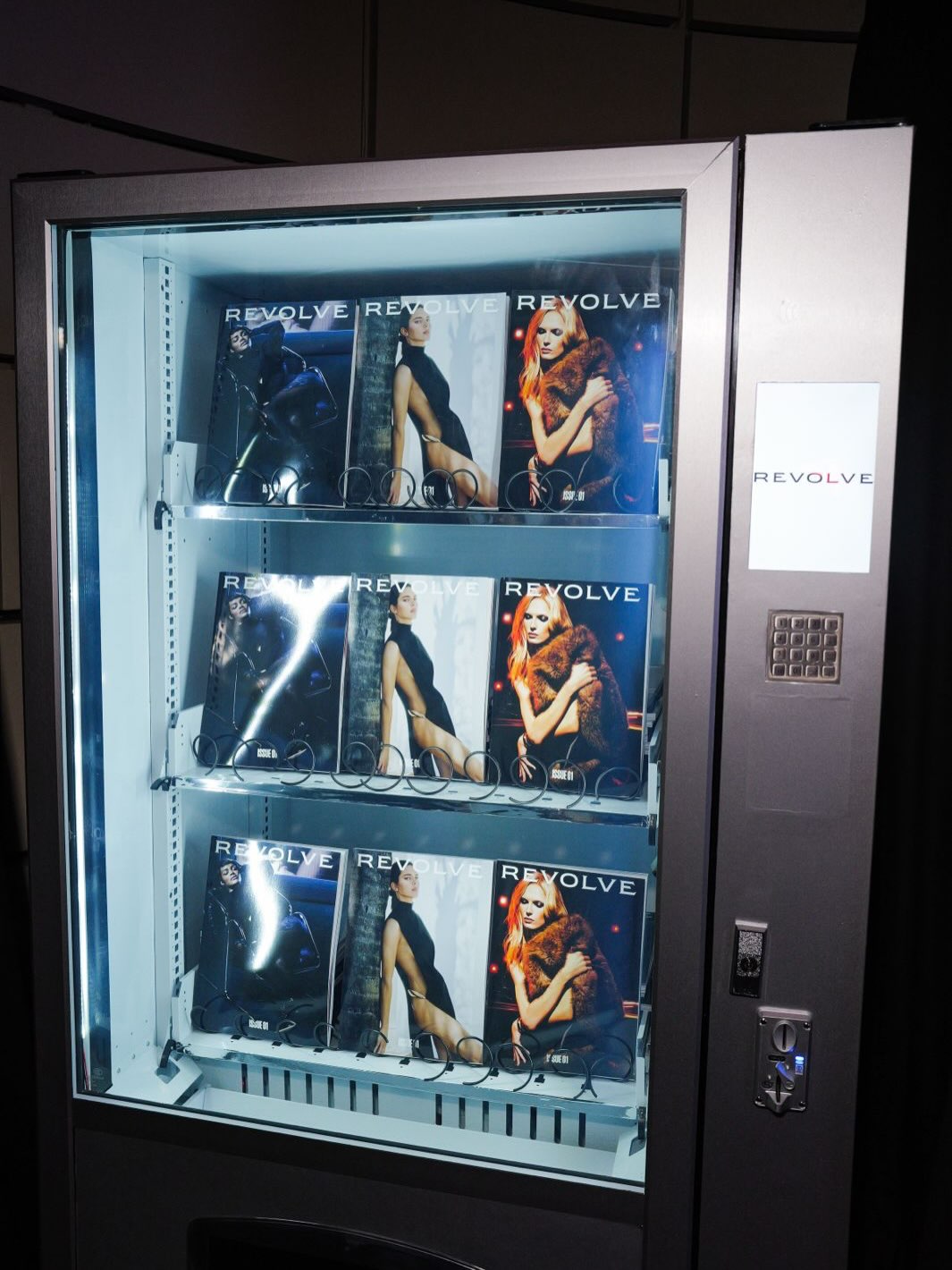
The annual print and digital publication debuted on 29 September. Baron & Baron developed the creative direction, with Natalie Tauger as fashion director. The launch also introduces an autumn offering under the Revolve Los Angeles name.
Those details place the magazine between several familiar formats. It is a retail publication with recognisable fashion-editorial ambitions, built around people whose interests and public lives extend beyond modelling clothes. The issue has room to make Revolve’s idea of a lifestyle more explicit than a product grid can.
In the digital edition, interviews sit alongside fashion stories and shopping edits. Teyana Taylor’s feature brings in her work as a director and family life. Cameron Brink’s pages connect sport with off-court style. A Los Angeles guide places destinations such as Holbox and Community Goods within the same wider world. These choices give readers several ways to enter the issue without beginning with a particular garment.

The local guide is especially useful to examine. A retailer recommending where to spend an afternoon is making a broader claim about its judgement. It asks the audience to trust its selection of places as well as products. If that selection feels convincing, the association can travel back to the clothes.
That is also why location matters. Los Angeles gives the issue a setting with specific routines and references. A general promise of an aspirational lifestyle can be difficult to distinguish from anyone else’s. A city guide has to make choices. Readers can recognise those choices, disagree with them and decide whether the publication’s taste overlaps with their own.
The shopping connections make the commercial purpose visible. This is not a publication readers need to mistake for an independent fashion title in order to enjoy. The useful question is whether the editorial experience gives them enough before asking for something in return. An interview or an interesting styling idea can be worthwhile even when the clothes are available a click away.

There is a balance to maintain. If every story feels designed solely to move stock, the magazine risks becoming an elaborate catalogue. If the editorial world floats too far from the actual offer, it may be enjoyable without helping customers understand what Revolve brings to their wardrobe. The strongest relationship would allow the story and the shop to make each other more useful.
The annual schedule adds another layer. A magazine meant to remain relevant for longer than a weekly update needs material with some staying power. Product availability can change more quickly than an interview becomes uninteresting. The digital edition will have to accommodate that difference if readers return to it later looking for something they have seen.
The digital edition makes the tension between reading and shopping particularly visible. A reader can move from an interview to a product without physically leaving the issue behind. That convenience is part of the proposition. It also puts pressure on the editorial pacing: the invitation to buy needs to arrive where it helps, without interrupting everything worth reading.
For Revolve, the continuing challenge is to make that editorial judgement recognisable. A useful shopping edit should feel selected, rather than merely available. A city recommendation should reveal something about the world around the clothes. Those decisions give the publication a reason to exist beyond displaying the range at greater length.
The issue is worth watching as a test of whether Revolve can become a place people visit to read and look, as well as a place they visit to buy. A good magazine can make browsing feel purposeful even when no purchase follows. If readers return for that experience, the shop begins each conversation with more than a list of things for sale.



.svg)


.svg)
.svg)