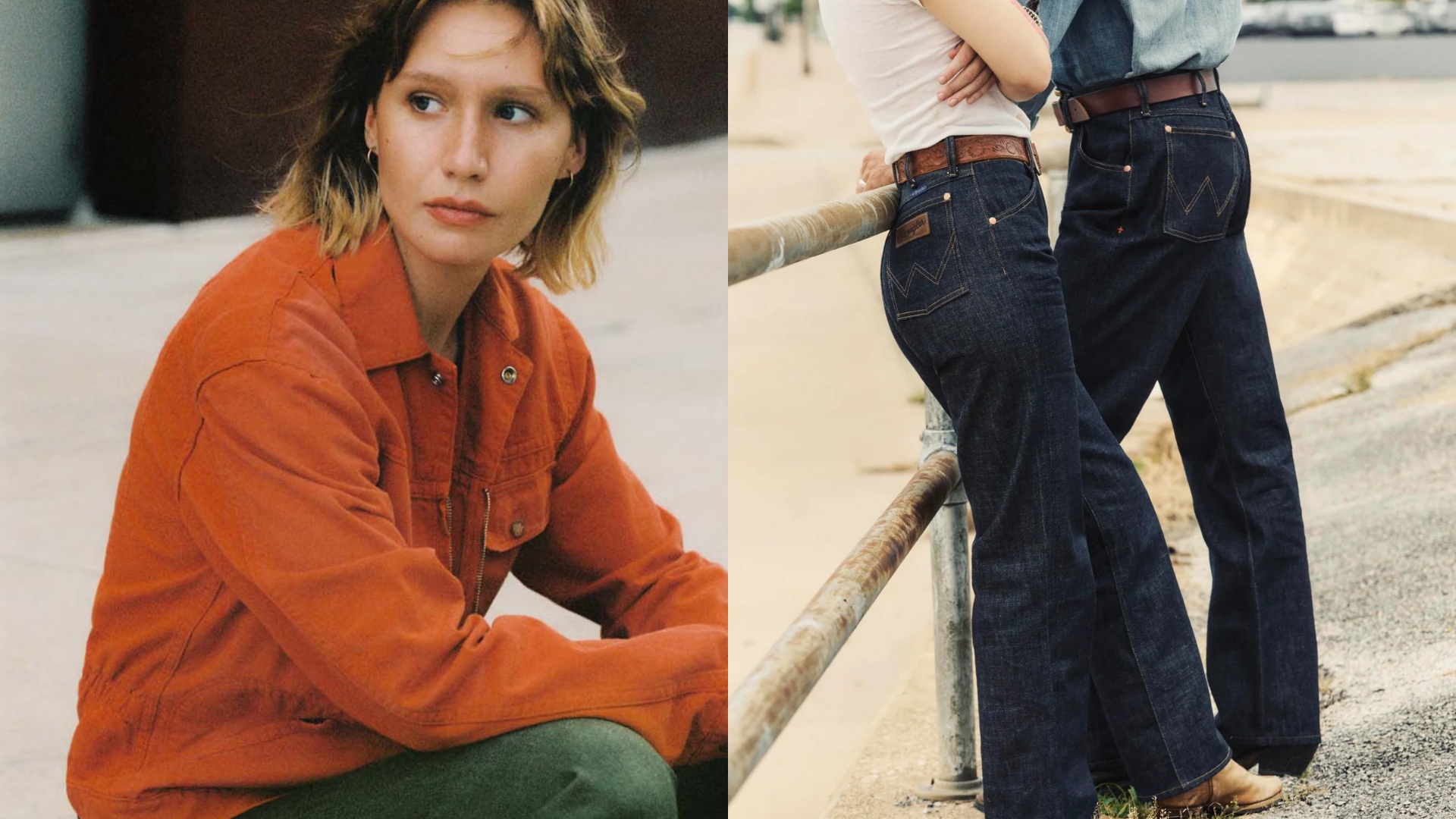
Take the 10MW White Oak jeans in the first capsule, released on 26 September. The fit draws on a Wrangler design produced in 1964, while the denim comes from a stock of fabric made by the White Oak mill. The reference reaches into the construction and material of the object, giving the customer more than an archival photograph to consider.
The jeans are patterned, cut and sewn in the United States from 13-ounce deadstock selvedge denim produced by Cone Mills White Oak in Greensboro, North Carolina. The fabric is 100 per cent cotton. Collaborative labels and a White Oak label make the provenance visible, but the cloth is the more substantial expression of it.

That matters because a collaboration between two established names can easily become an exercise in combining marks. Here, the product story gives the customer several things to evaluate: the cut, the fabric and the origin of the making. The association between the brands is supported by decisions that can be described without showing either logo.
Wrangler contributes a recognisable archive and a relationship to a practical way of wearing denim. Imogene + willie’s presentation brings the making and fit into close view. The collaboration’s appeal seems to come from this agreement around the object, rather than from an unexpected clash between two unrelated worlds.
The details also show how to use an archive without treating it as scenery. An older fit and a particular fabric can each carry a reason for being chosen. Explaining those decisions lets a contemporary customer understand what has been brought forward and what she is being invited to appreciate in the current product.
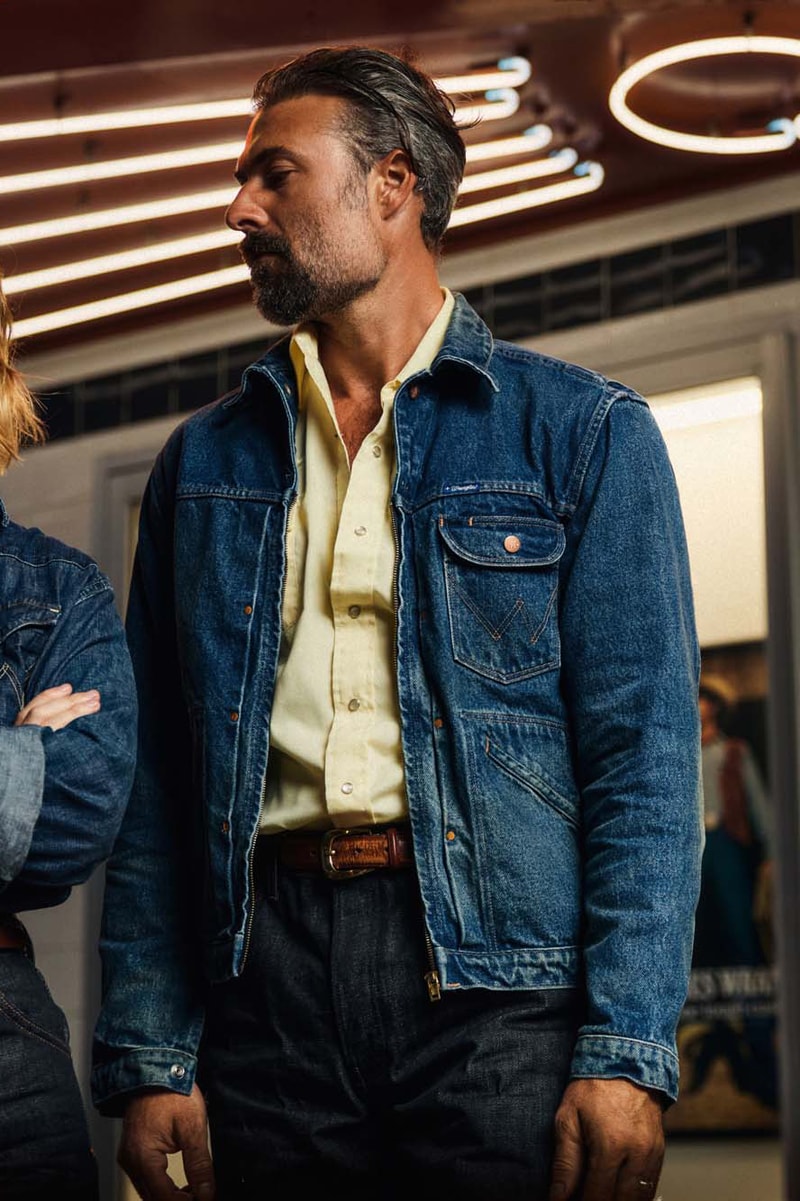
An older design can become relevant for reasons its original maker did not anticipate. People may like its proportions before knowing the date it was made. The historical explanation adds another layer without requiring the customer to recreate an earlier life. That gives heritage room to remain useful without becoming a costume.
Manufacturing information works best in the same concrete way. Naming the mill and the place of production gives a claim about provenance somewhere to land. It does not, by itself, prove that the jeans will fit every customer better or outlast every alternative. Those are separate questions. The value of specificity is that it helps people understand what is actually being claimed.
Fabric weight is another example. The number is meaningful to someone comparing denim, but it should not become a shortcut for saying heavier is always better. The customer still needs to consider how she likes jeans to feel and where she intends to wear them. Product detail is useful when it supports a choice, rather than simply sounding authoritative.

The fit information on the page continues that practical approach. Customers are directed to compare measurements with trousers they already own. That is a small but important bridge between an appealing story and the uncertainty of ordering clothes online. The brand’s knowledge becomes useful only when the shopper can apply it to her own body and wardrobe.
This level of explanation can also make comparison more useful. A customer can decide whether the weight appeals, whether the measurements suit a pair she already wears and whether the construction justifies a closer look. The story has given her something to examine, rather than asking familiarity with two names to complete the sale.
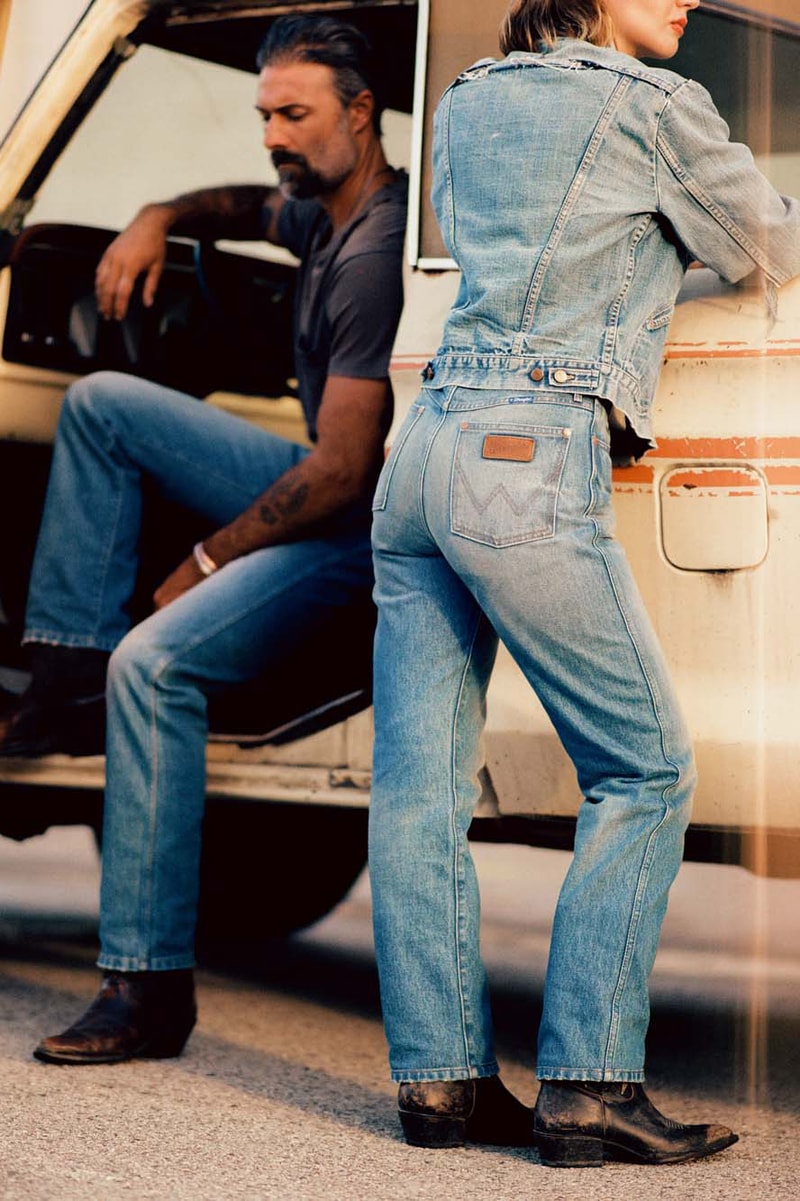
On that basis, the case is useful because it gives heritage a material form. The customer can move from an attractive idea of American denim to a particular fabric, construction and fit. Each detail reduces the amount of work the word “timeless” has to do on its own.
The collaboration becomes convincing when the history helps us understand the jeans we are looking at now. A story about the past can make someone pause. Knowing what that story has contributed to the actual product gives them a reason to keep looking.




.svg)


.svg)
.svg)